Flower Therapy Book - The Repertoire of Californian Essences
Natur Editore
€39.00
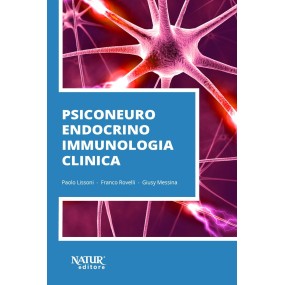
Pnei Book - CLINICAL PSYCHONEUROENDOCRINOIMMUNOLOGY
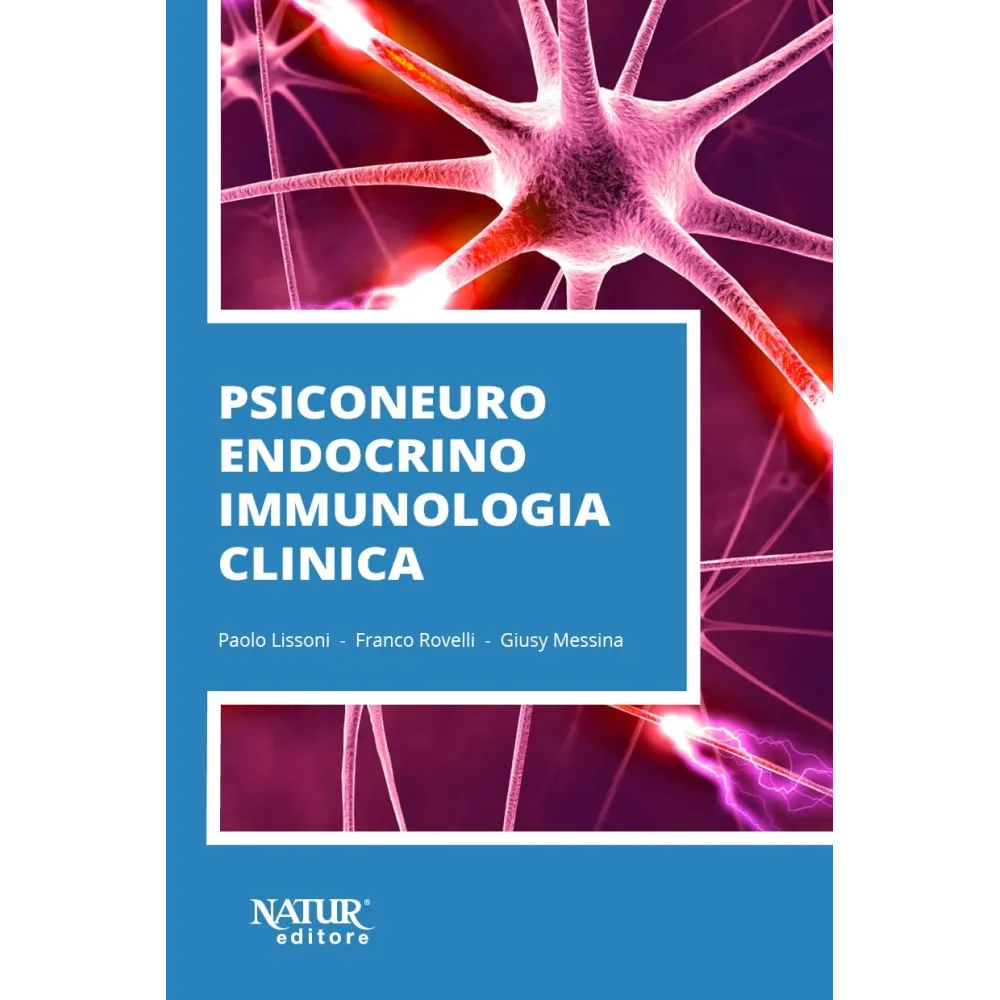
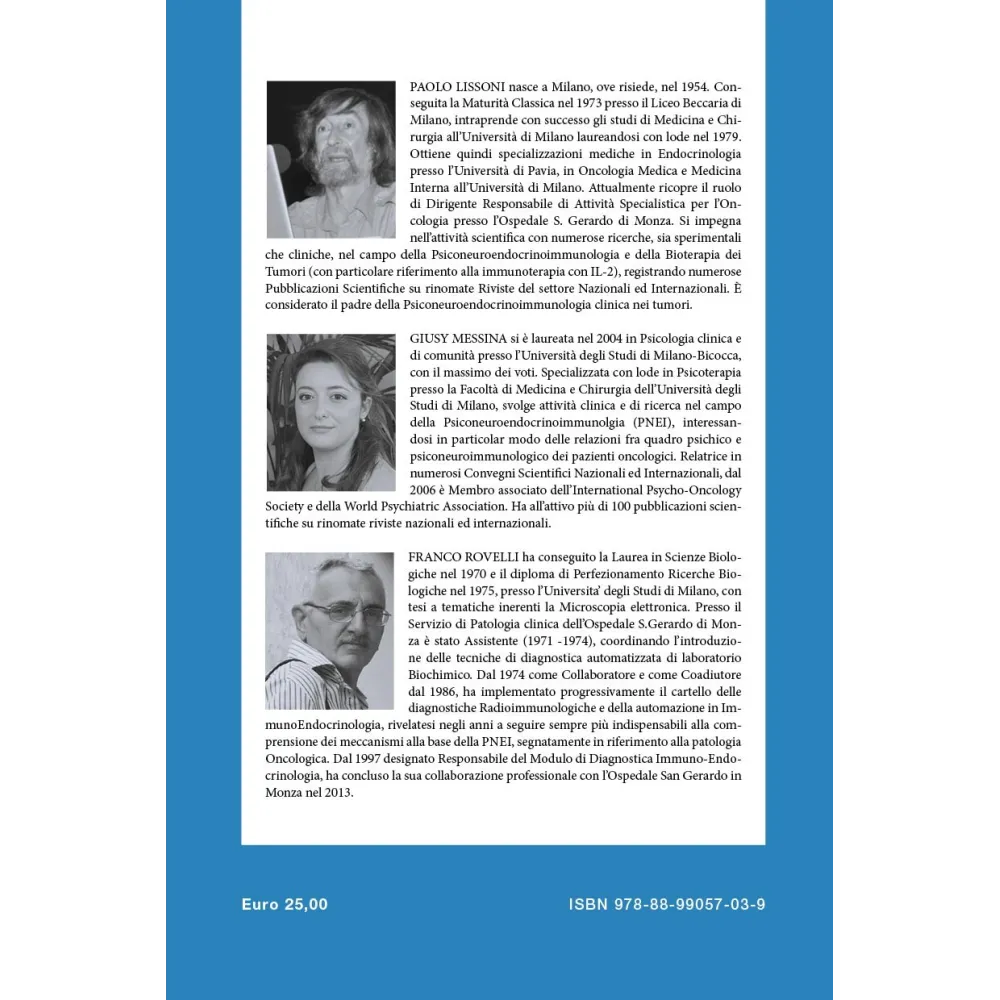
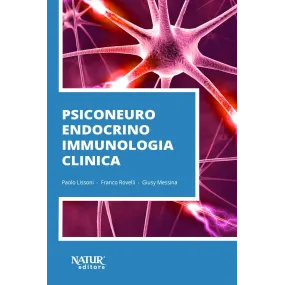
Title: Clinical Psychoneuroendocrineimmunology
Authors: Paolo Lissoni, Giusy Messina, Franco Rovelli
Publisher: Natur Editore
Format: 140 x 210 mm - Page 168
1st Publication: 2023
PNEI is the most recent medical discipline, studying the neuro-immunochemical mediation of emotions and states of consciousness and their effect on health or disease through central psycho-neuroendocrine regulation of the immune system. Emotions are the expression of the psycho-soul dimension, while the state of consciousness is related to the spiritual dimension of the person, always keeping in mind that spiritual is not synonymous with mental or moral conscience, but rather with self-awareness. Spirituality is solely self-awareness, and true self-awareness is only that founded on Love, understood as the perception of others as if they were another self.
Clinical PNEI is simply the clinical application of PNEI knowledge at the etiopathogenetic, diagnostic, therapeutic, and preventive levels. Unlike the now scientifically outdated Psychosomatics, which attributed the central and peripheral nervous systems' neurovegetative role in mediating the psychic influence on the function of various organs to the sole purpose of the system, PNEI identifies the lymphatic immune system as the primary link between a person's psycho-spiritual experience and their biological state of health. In short, it can be said that the nervous system mediates psychic life, while the immune system mediates spiritual consciousness on the functional state of the biological body. While alterations in neurovegetative nervous function give rise to chronic, persistent but minimal functional disorders even if they worsen living conditions, the immune system responds in terms of Life or Death in the two extreme conditions of a missing or exaggerated reaction, in relation to tumoral or autoimmune diseases respectively, effectively sanctioning recovery or death.
PNEI neither replaces nor negates any of the previous medical disciplines, but rather requires and integrates them according to a holistic vision of the human being, thus definitively overcoming the mechanistic and separative conception of the various organ functions of a living organism. In itself, PNEI is at least the integration of three different medical disciplines:
1) Endocrinology with regard to endocrine and neuroendocrine function
2) Immunology as it relates to immunological function
3) Neurology-Psychiatry with regards to psycho-neuro-chemical functionality.
Compared to PNEI, understood as a primarily experimental science, Clinical PNEI requires expertise in a fourth medical discipline, that of Internal Medicine, in order to translate the scientific knowledge emerging from PNEI into a new way of interpreting the etiopathogenetic physiopathology of the main human diseases.
Specifically, PNEI also includes a specific expertise in the pathophysiology of the pineal gland, which, paradoxically, despite being one of the seven endocrine glands, still falls outside the scope of endocrinology after decades. Likewise, PNEI's core expertise includes studying the biological effects of various proteins produced by immune cells, the so-called cytokines. Traditional immunology, based on the pure in vivo translation of in vitro immunological observations, thus failing to account for the neuroendocrine modulation of the immune response in living organisms, still seems unable to address these issues in a way that would lead to a new and more systematic understanding of the immune system's involvement in major human diseases.
The evidence on which PNEI is based in its holistic pneumato-psycho-biological vision of the human person is essentially twofold:
1) Nervous and endocrine cells have receptors for immune system cytokines, so they are influenced by them and in turn produce endocrine and neuro-active molecules capable of directly influencing the functionality of immune cells, with stimulating or inhibiting effects
2) Immune cells, lymphocytes and macrophages, have receptors for hormones and neuroactive molecules, which is why their functionality is under central neuroendocrine control. They, in turn, through the production of cytokines, are able to act not only on other immune cells but also on the neuroendocrine system, and therefore on the hormonal and neurological state of the person.
PNEI consequently requires a general revision of all medical and medical-psychological science.

Title: Clinical Psychoneuroendocrineimmunology
Authors: Paolo Lissoni, Giusy Messina, Franco Rovelli
Publisher: Natur Editore
Format: 140 x 210 mm - Page 168
1st Publication: 2023
16 other products in the same category:
Flower Therapy Book - The Repertoire of Californian Essences
Natur Editore

Pnei Book - Medicine and Gospel in the Quran Alone
Natur Editore

PNEI Book - PNEI Therapeutic Protocols for Human Systemic Pathologies
Natur Editore

Bach Flowers Book - Bach Flower Essences & The Patterning of Water - Julian Barnard
Healing Herbs
Pnei Book - Theology of Sexuality
Natur Editore
Pnei Book - Principles of Celtic-Aryan Medicine
Natur Editore
Pnei Book - Essenic Medicine from Qumran to Psychoneuroendocrinoimmunology
Natur Editore

Flower Therapy Book - Tibetan Crystalmantra Waters
Natur Editore
Pnei Book - Theology of Science
Natur Editore

Flower Therapy Book - In the Heart of the Wild Hinterland
Natur Editore

Flower Therapy Book - Animal Essences and Iridology
Natur Editore

Bach Flower Remedies Book - The Healing Herbs of Edward Bach - Julian Barnard
Natur Editore
Floritherapy Book - Floral Phytotherapy
Natur Editore
Customers who bought this product also bought:

Flower Therapy Book - The Twelve Healers and Other Remedies
Natur Editore


Australian Living Single Essence - Balga Blackboy (Zanthorea preissi) 15 ml
Living Essences

Tibetan Waters Cristalmantra Single Essence - Female Quartz 15 ml
Acque tibetane Cristalmantra
Flower Therapy Book - The Repertoire of Californian Essences
Natur Editore
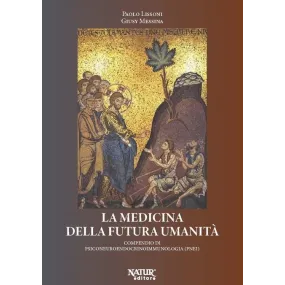
Pnei Book - THE MEDICINE OF FUTURE HUMANITY
Natur Editore

PNEI Pharma Food Supplement - Daliso Med 30 Capsules
PNEI Pharma
Floritherapy Book - Floral Phytotherapy
Natur Editore